Want to be in the loop?
subscribe to
our notification
Business News
THE DIFFERENT FATES OF ENTERPRISES AFTER M&A DEALS
There are many reasons behind the decisions by business owners to sell stakes to foreign investors.
Many of them made the decisions because they were on the verge of bankruptcy and hoped foreign capital would save them. Others issued additional stakes because they wanted to expand the business.
Consumer goods, food and household-use electric appliances were the business fields which saw highest numbers of M&A deals in 2009-2011.
Asia Vina, a fan manufacturer, Thuan Phat Food JSC and Diana JSC were among the best known deals with transaction value of between several millions dollars and hundreds of millions of dollars.
Some other affairs were less known and their value remain a secret, but analysts believed they also had high transaction values.
These include the transfer of 83 percent of stake in Con Heo Vang, the supplier of processed meat to airports, restaurants, hotels and resorts in HCM City and sea cities to Nippon Meat Packers, a subsidiary of the Japanese largest food processor Nippon Ham Group.
Asked about the stake transfer deal, Nguyen Huu Chung, the founder of Con Heo Vang, said the company met big difficulties in 2008-2011, affected by the global economic crisis.
Chung believes that the ‘marriage’ with Nippon Meat Packers was a good thing for Con Heo Vang, because the Japanese partner, with its great advantages, was expected to help Con Heo Vang grow.
After one year of cooperation, Con Heo Vang obtained high growth rate of 20 percent, while its market share has expanded step by step and more products have been available at retail chains.
Diana, after transferring 95 percent of its stakes to Japanese Unicharm at the price of $184 million in 2011, has gained tla growth rate of 8 times. Its turnover of VND1 trillion and profit of VND40 billion soared to VND3.9 trillion and VND800 billion, respectively, just three years after the stakes were transferred.
However, not all M&A deals could help Vietnamese businesses reap fruits.
In May 2011, when Asia Vina sold 65 percent of its stake to Groupe SEB, a ‘big guy’ which possesses 27 brands and has products sold in 150 countries, the company had 45 shops in its retail chain.
Meanwhile, the figure has reduced to 36 as updated on its official website quatvietnam.com.vn, though Asia Vina’s managers planned to expand the retail network from 45 shops to 100 in 2012.
According to IMF, Vietnam ranks 55th in the world in GDP, but ranks 20th in terms of M&A value.
Source: VNEP
Related News
BANKING / FINANCE / INSURANCE / TAX
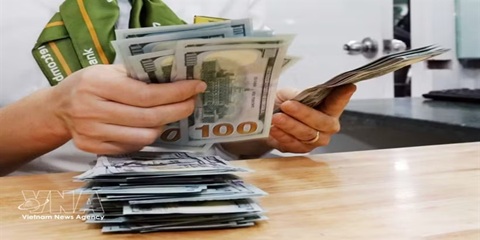
REMITTANCES TO HCM CITY RISE NEARLY 40% IN Q3
Remittances to HCM City reached more than US$2.83 billion in the third quarter of this year, up 39.5 per cent from the previous quarter and 3.6 per cent year-on-year. This was the first quarter showing positive annual growth this year, helping narrow the decline in remittance inflows over the first nine months. According to the State Bank of Vietnam (SBV)’s Regional Branch 2, remittances transferred to HCM City through credit institutions and economic organisations totalled $2.835 billion in Q3, an increase of more than $802 million from the previous quarter.
TECHNOLOGY
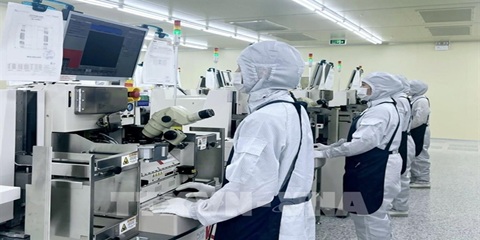
TECH SECTOR GROWTH OPENS UP OPPORTUNITIES FOR VIỆT NAM TO GO GLOBAL
The growth of the electronics, semiconductor and high-tech sectors worldwide is opening up a variety of opportunities for Vietnamese enterprises to integrate more deeply into the global supply chain. However, to become suppliers for these corporations, domestic enterprises must meet rigorous standards regarding quality, technology, productivity and order fulfilment capabilities.
VIETNAM ECONOMY INVESTMENT
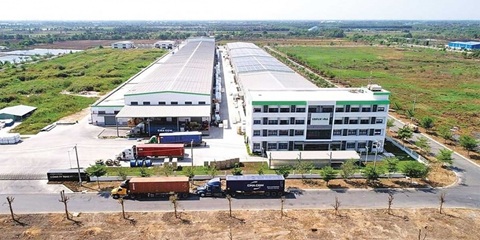
FOREIGN INVESTORS SEEKING A SYNCHRONISED MANUFACTURING ECOSYSTEM
Instead of focusing only on land costs and incentives as usual, foreign investors are seeking a synchronised manufacturing ecosystem, from stable power supply and logistics to shared infrastructure and the convenience of completing residence procedures for experts to serve their long-term investment in the country.
MEMBER CORNER / PROMOTIONS
SENTRYSAFE FHW40200 – PROTECT YOUR VALUABLES, ENJOY PEACE OF MIND!
Looking for a reliable solution to protect your important documents, cash, and valuables from fire and water damage? Genuine SENTRYSAFE - Reliable protection for your valuables and peace of mind! Contact Sen Wai Vietnam for more information and personalized product recommendations.
PROPERTY / INDUSTRIAL ZONE
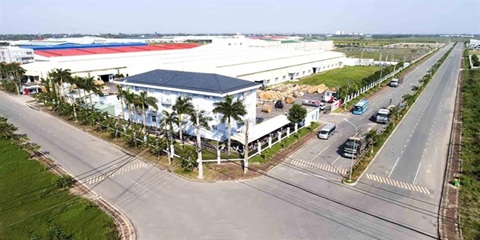
HCM CITY ATTRACTS US$5.7 BILLION INTO EXPORT PROCESSING AND INDUSTRIAL ZONES
HCM City attracted US$5.7 billion in domestic and foreign investment into its export processing and industrial zones during the first nine months of 2026. The figure exceeded the city's full-year target by 31 per cent, highlighting strong momentum in high-quality industrial investment under Resolution No.10-NQ/TW. Total investment reached 131 per cent of the 2026 target of $4.25 billion and represented a 29 per cent increase compared with the same period in 2025, according to the city's Export Processing and Industrial Zones Authority (HEPZA).
INFRASTRUCTURE / CONSTRUCTION / LOGISTIC / PORT
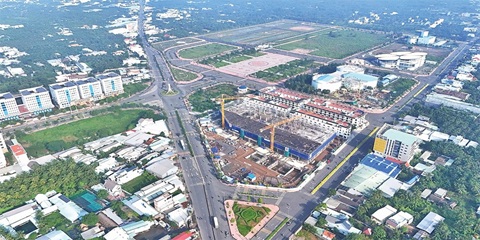
DONG THAP PROVINCE STEPS UP INDUSTRIAL EXPANSION AND INFRASTRUCTURE CONNECTIVITY
Accelerating public investment, strengthening inter-regional connectivity, and expanding industrial land are helping Dong Thap efficiently bolster competitiveness and drive economic growth. Following the 2025 merger of the former Dong Thap and Tien Giang provinces, the expanded Dong Thap province in the Mekong Delta faces mounting pressure to accelerate infrastructure development and strengthen connectivity among local economic zones, urban areas, industrial parks (IPs), and production centres.
Events Sponsors






















